
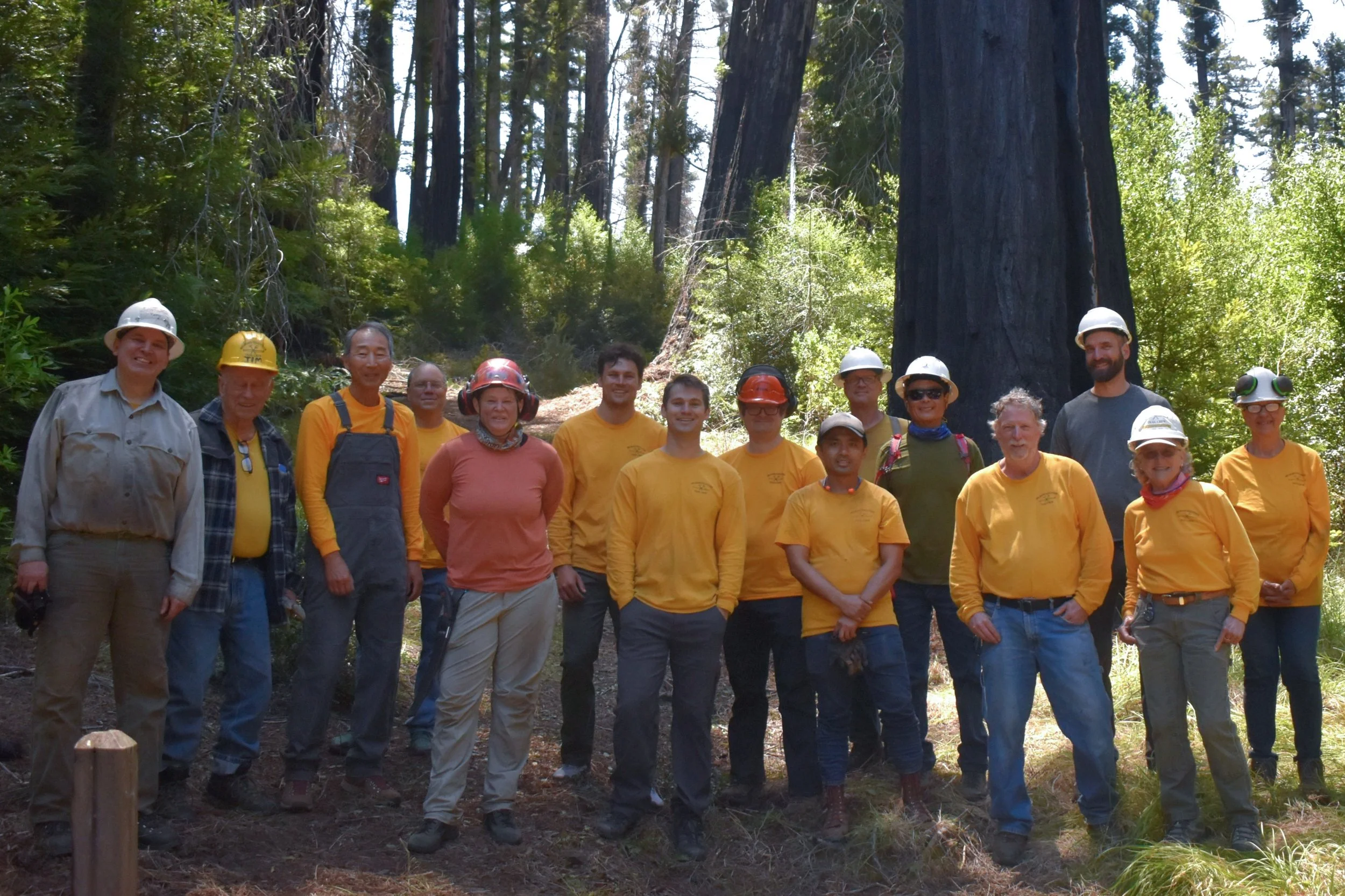
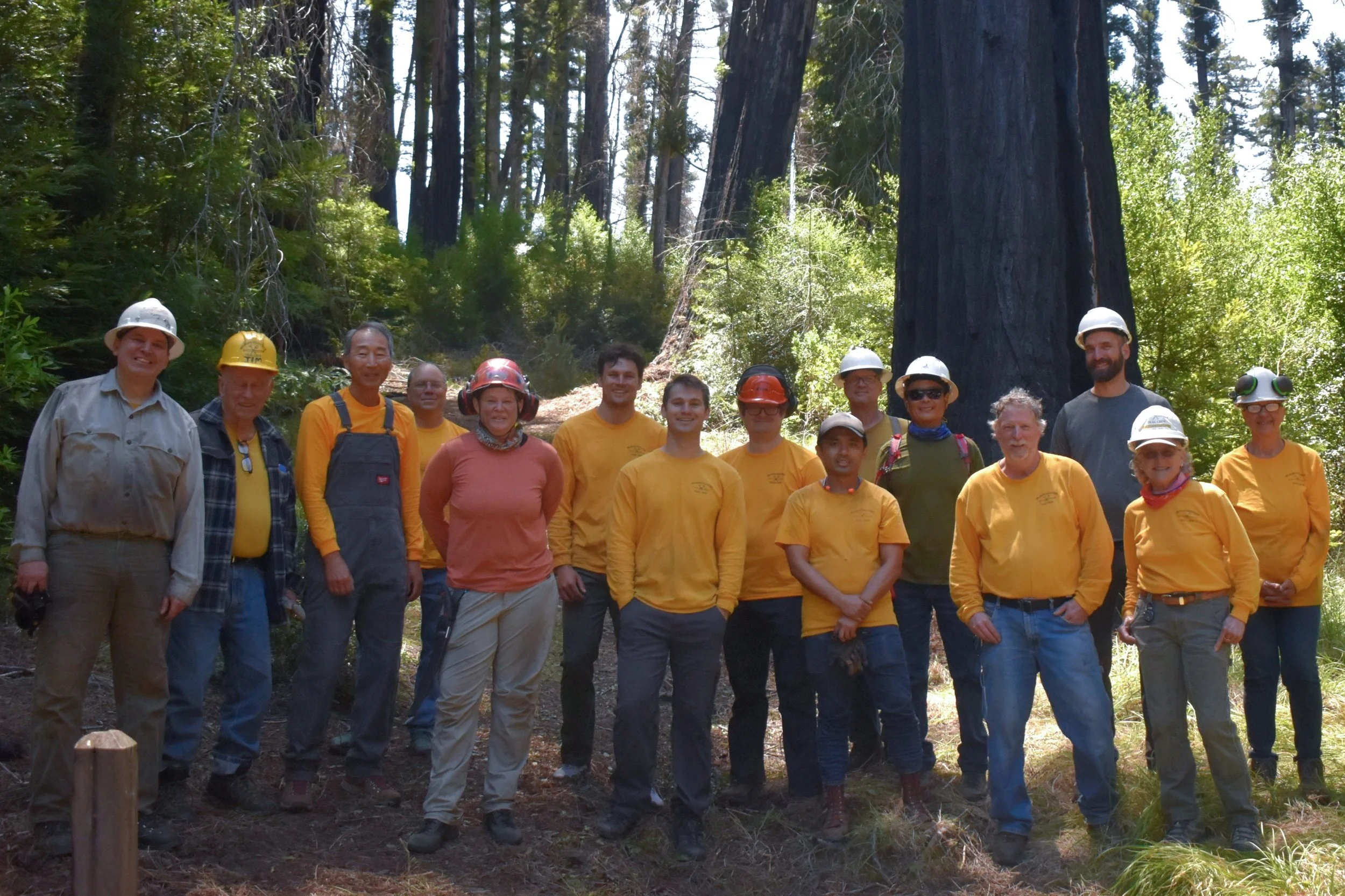
In January 2024 the BBVTC began CZU fire recovery work on Sequoia Trail and our May 16th workday brought us full circle as we were tasked with clearing the trailhead near the old park headquarters as the final step before opening the trail to park visitors. There was a good turn out of 17 and work started at the old HQ area.
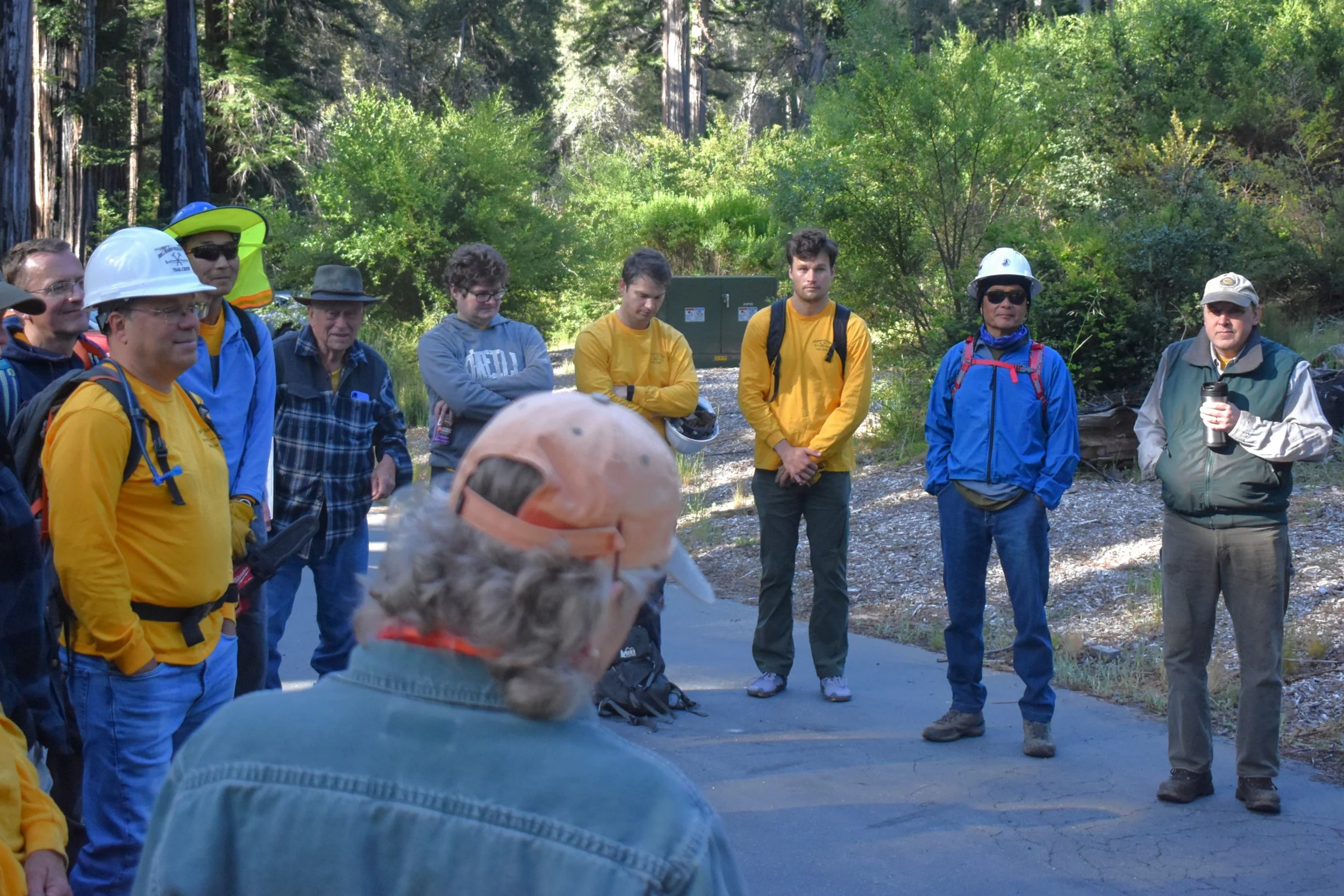
In between, the Trail Crew spent 18 months doing the initial clearing on the entire 2.7 mile length from the old park HQ area up to Sempervirens Falls and Slippery Rock, across 236 and down the west side of the trail to North Escape Rd. Our work was followed by State Park and CCC crews which made significant improvements to the trail corridor including constructing new foot bridges, completing a short trail reroute, widening many sections of trail, and major repairs to a short stretch of trail that had experienced both a slide from above and a slipout below.
So after 28 months of combined effort, there was only one remaining item to be completed - Clear the trailhead at the old HQ location.
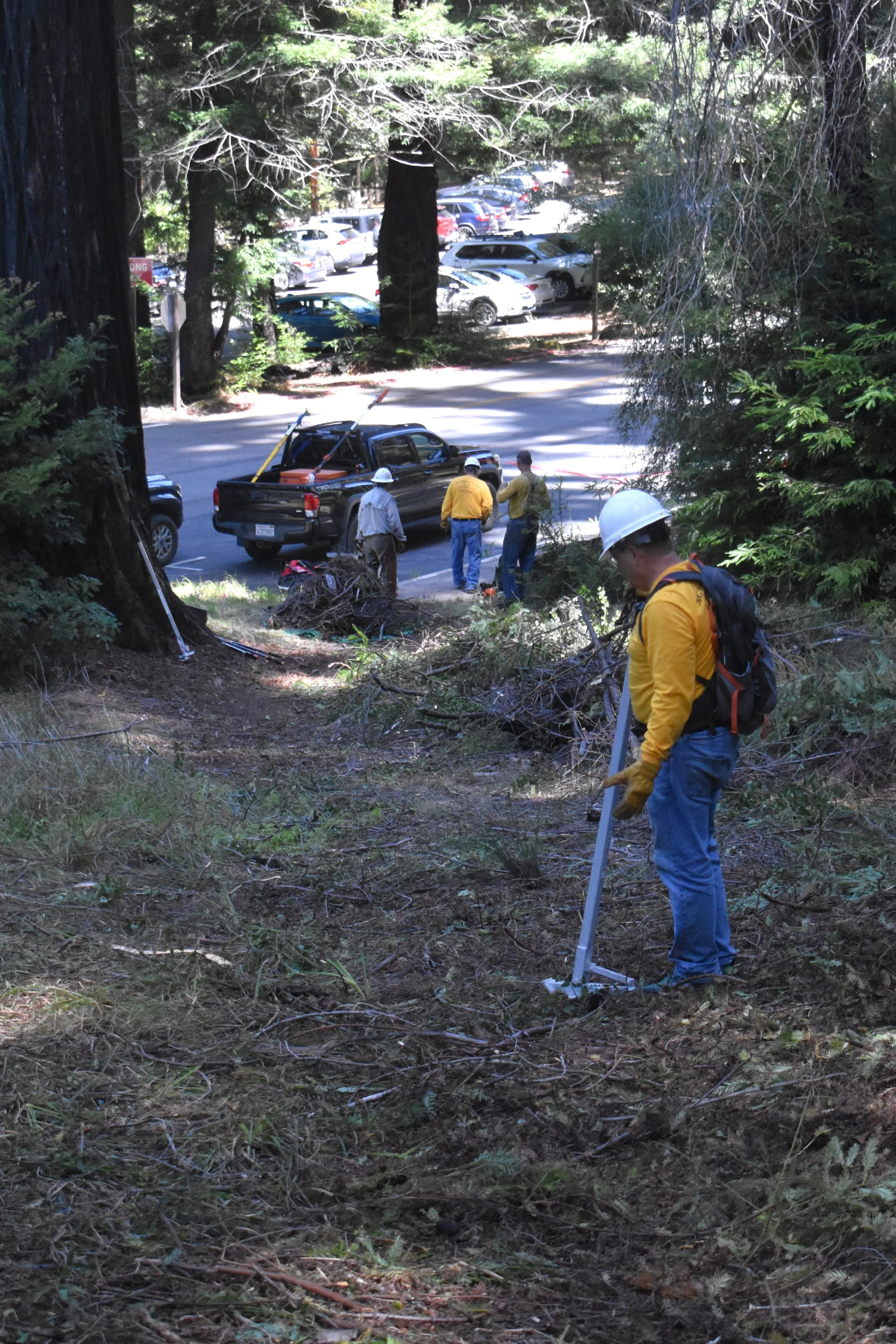
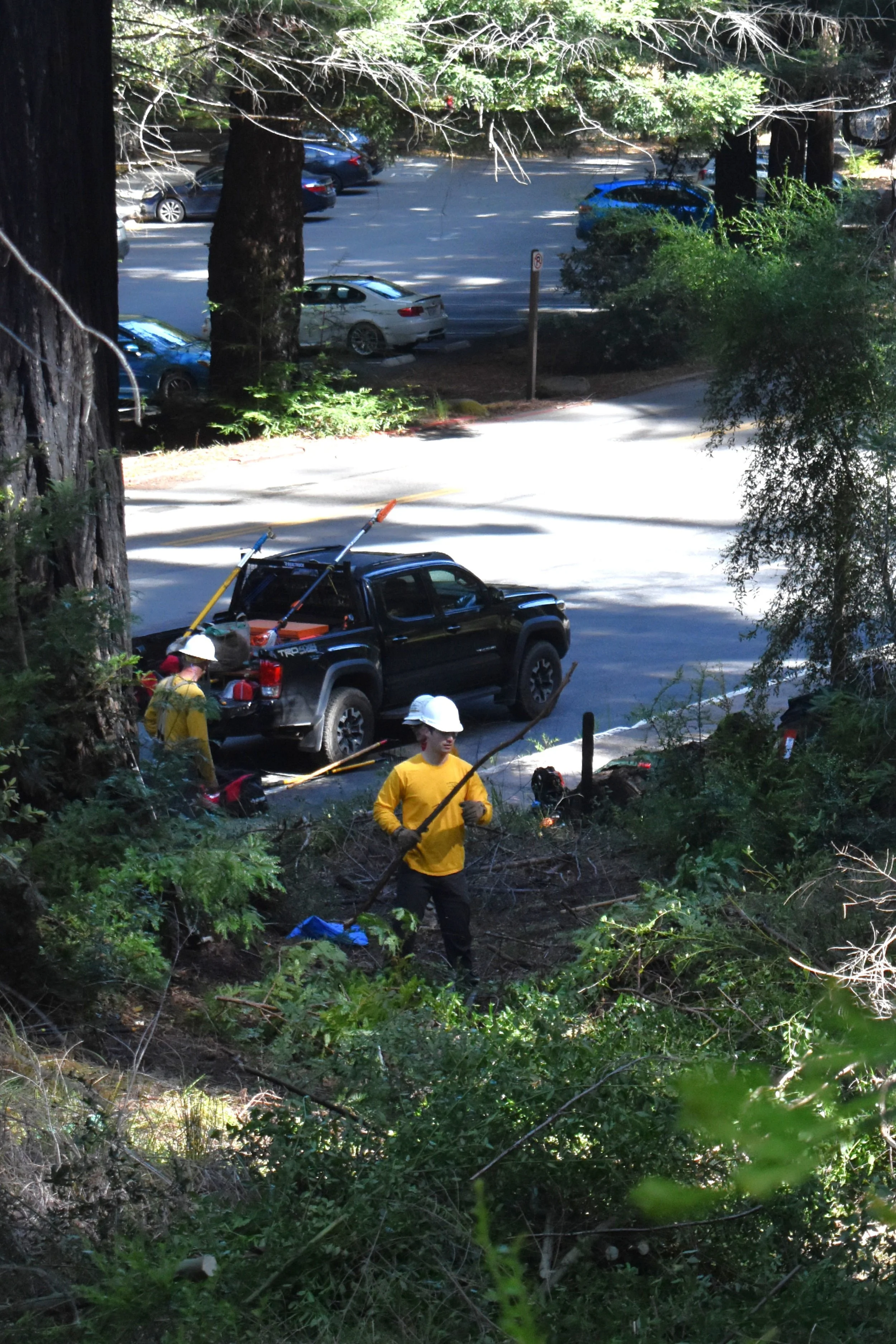
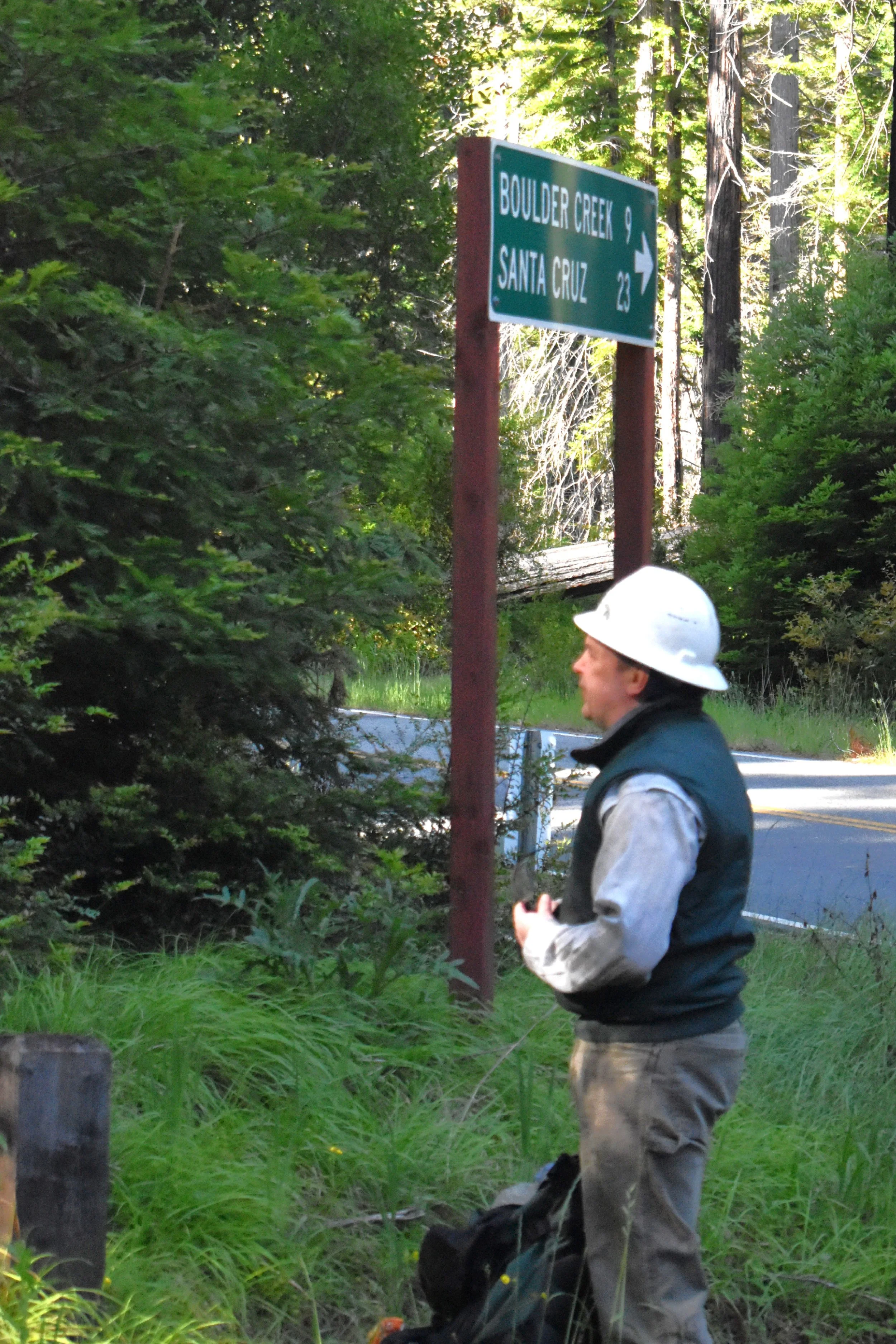
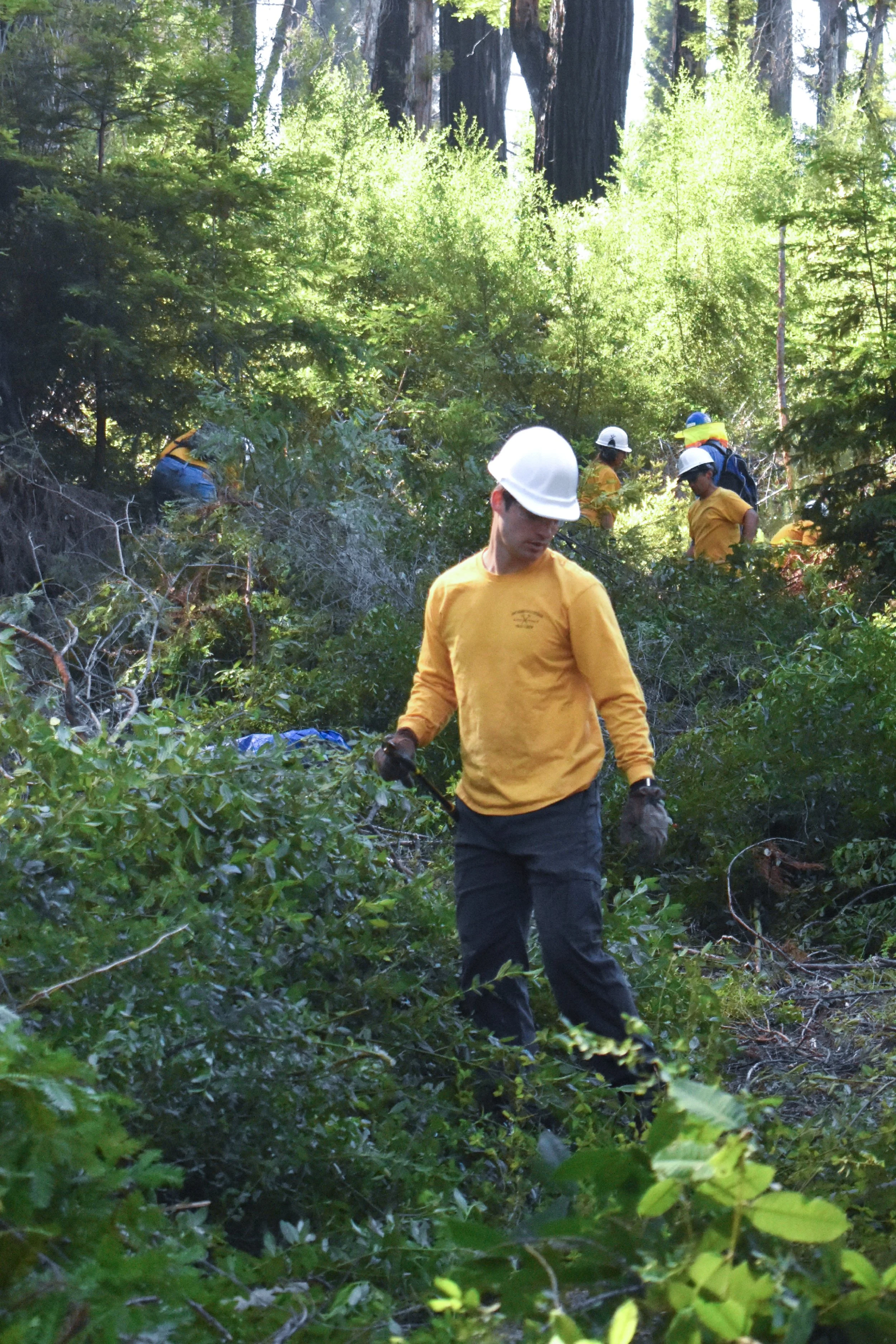
The work itself was pretty straight forward with only a modest amount of vegetation remaining to be cleared from about 100 yards of trail. The most difficult task was determining where to hide the debris since burn piles from earlier work along the trail had already been burned, so they were not an option.
After discarding one hiding spot since it required crossing a small meadow area and likely damaging it, we settled on dragging the debris further along the trail to two uphill areas that were out of sight from the trail.
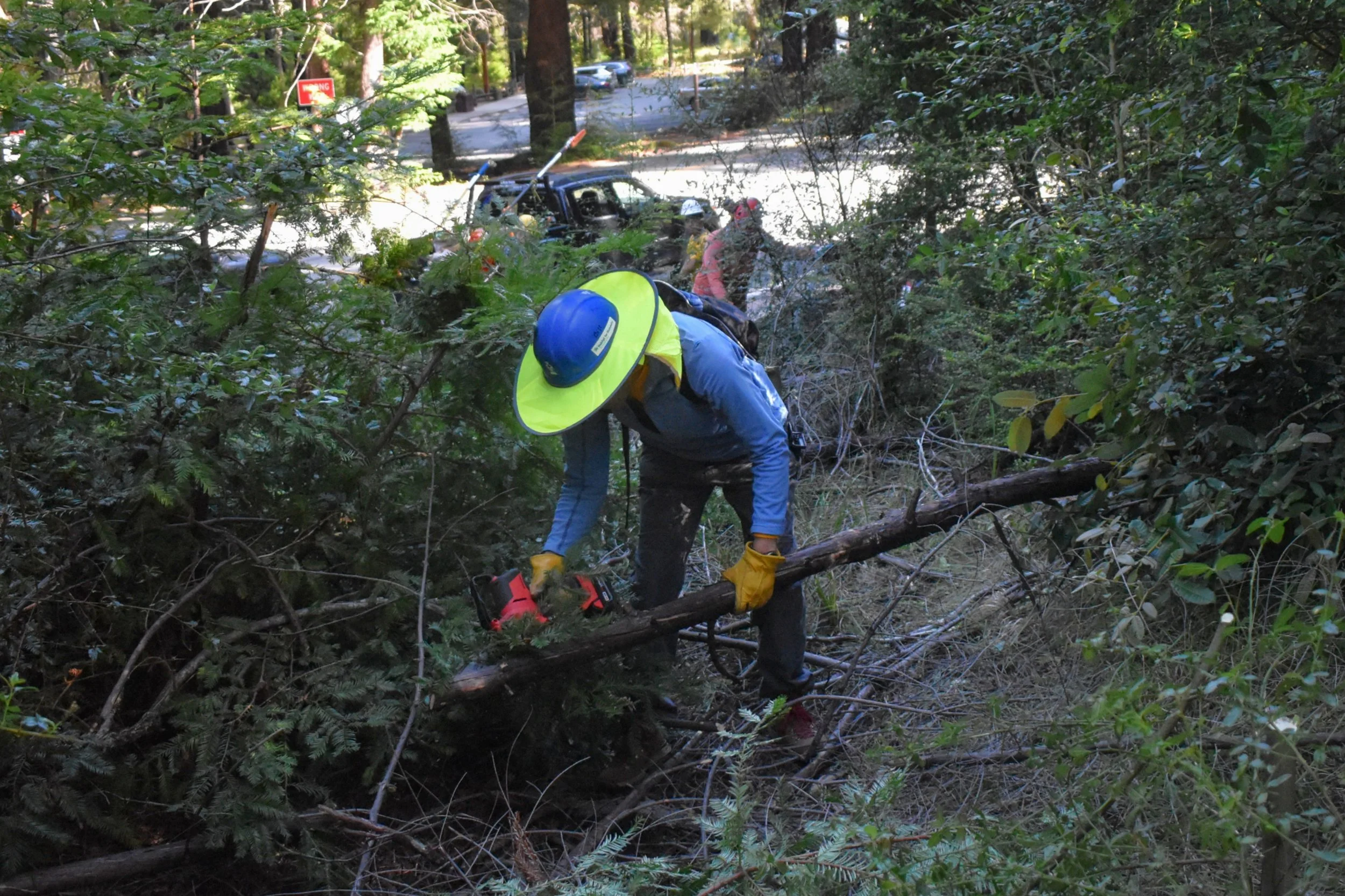
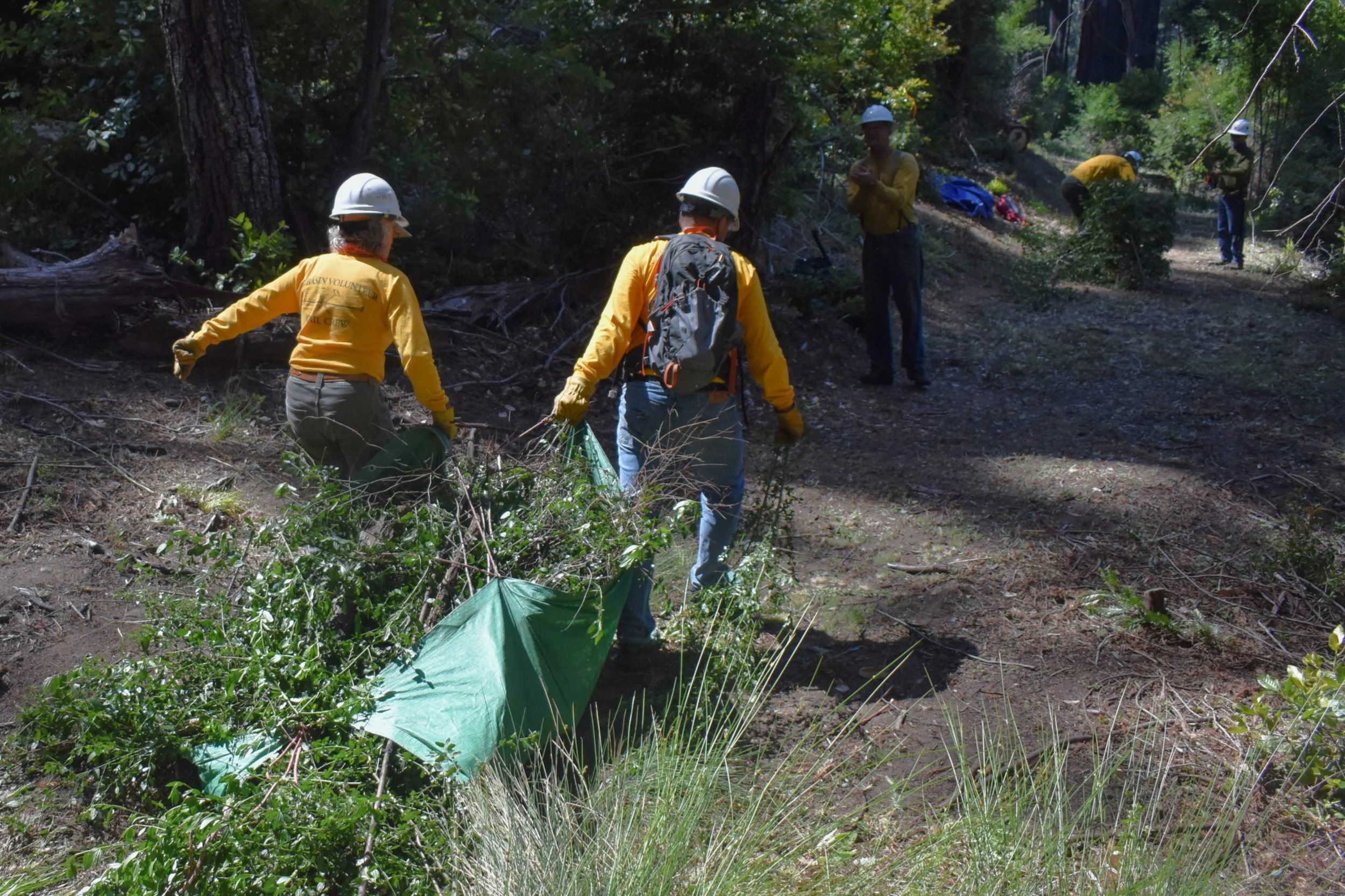
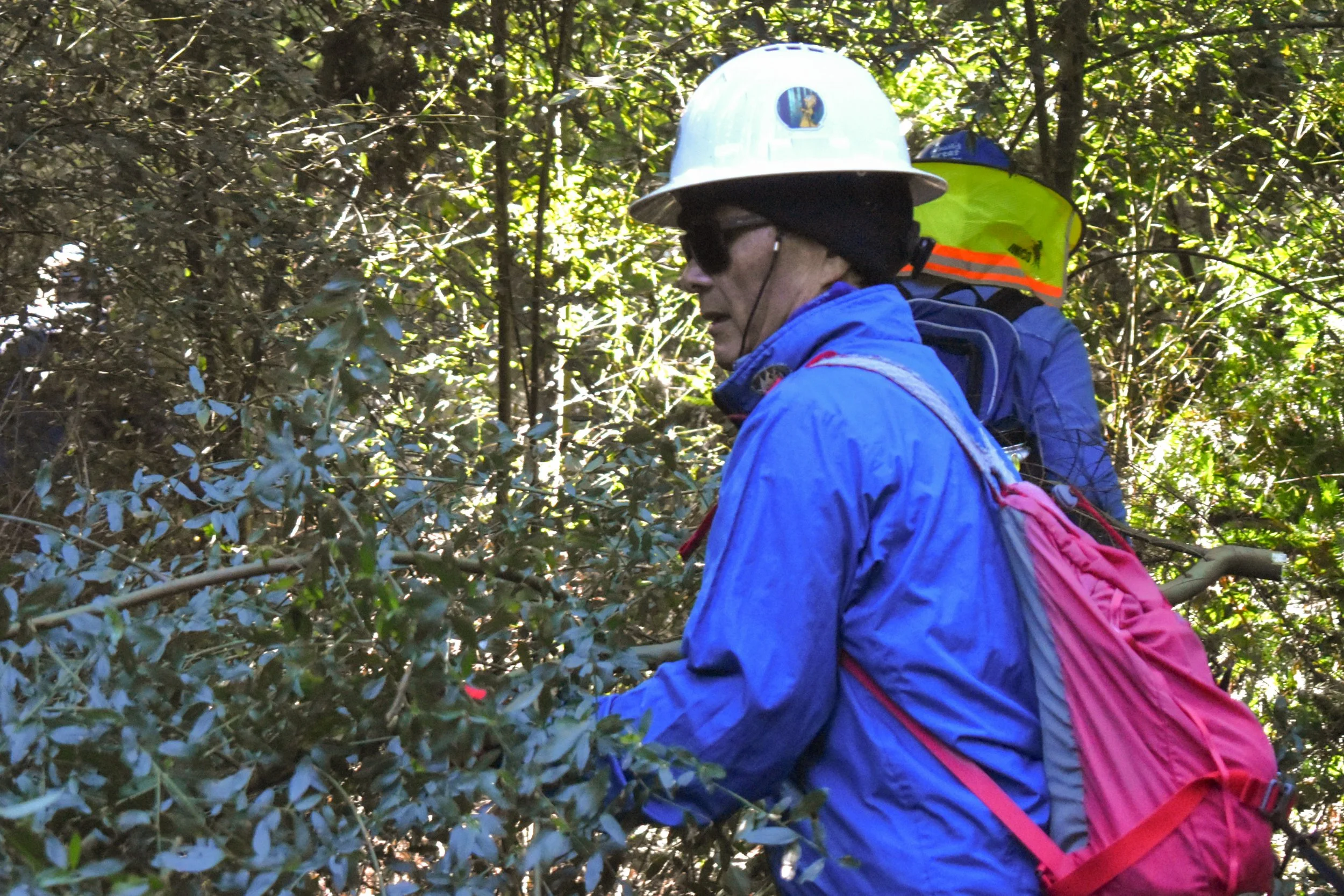
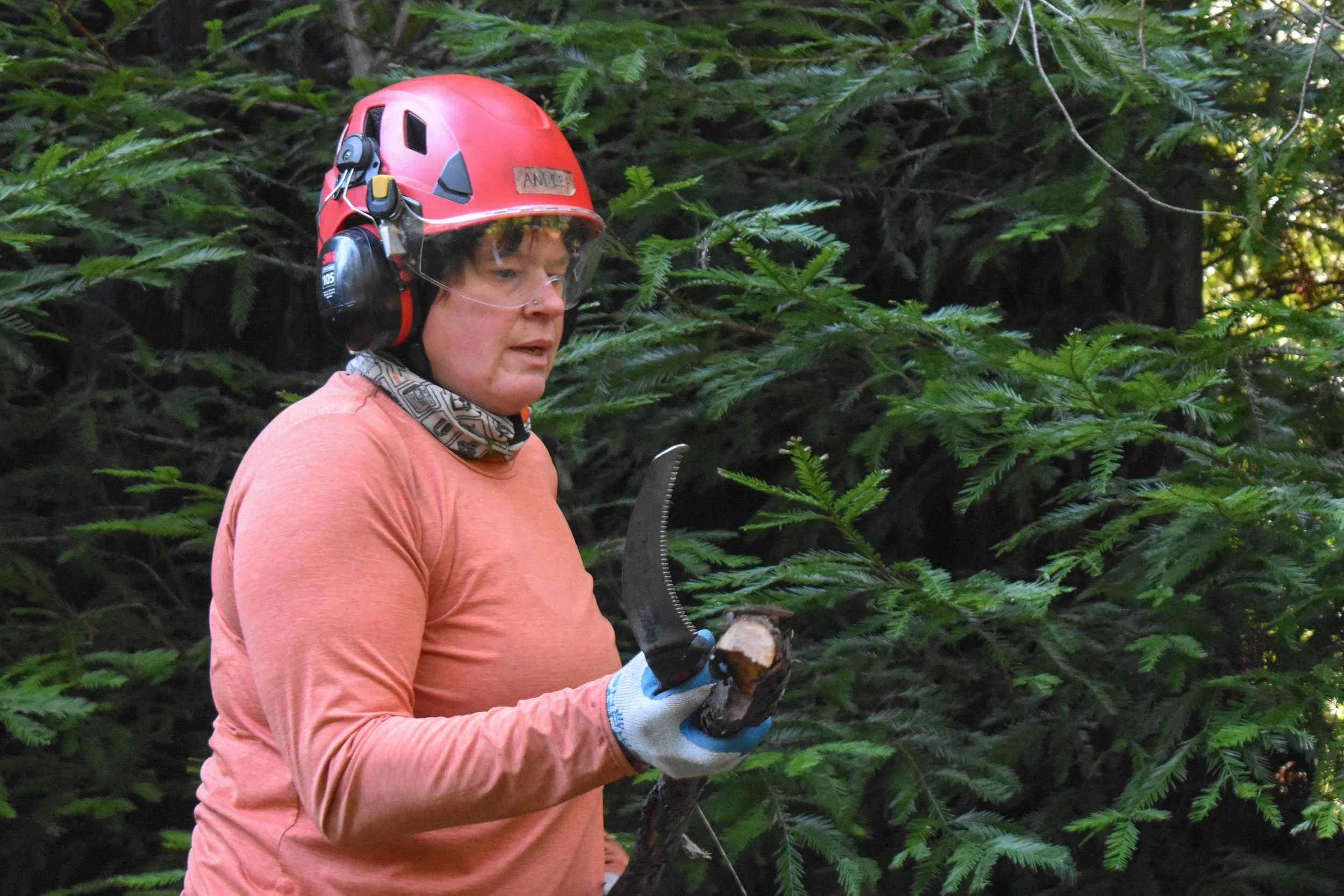
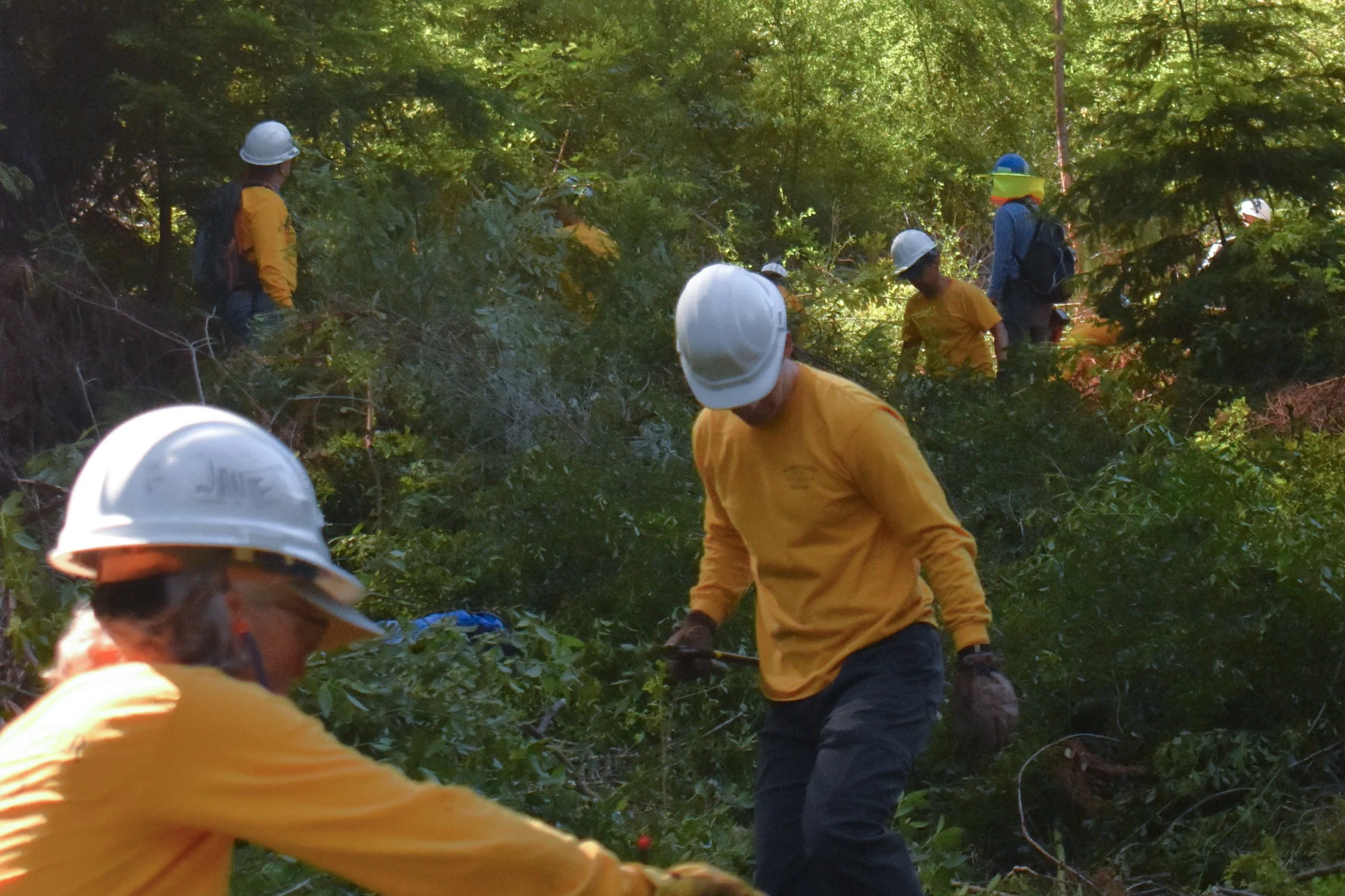
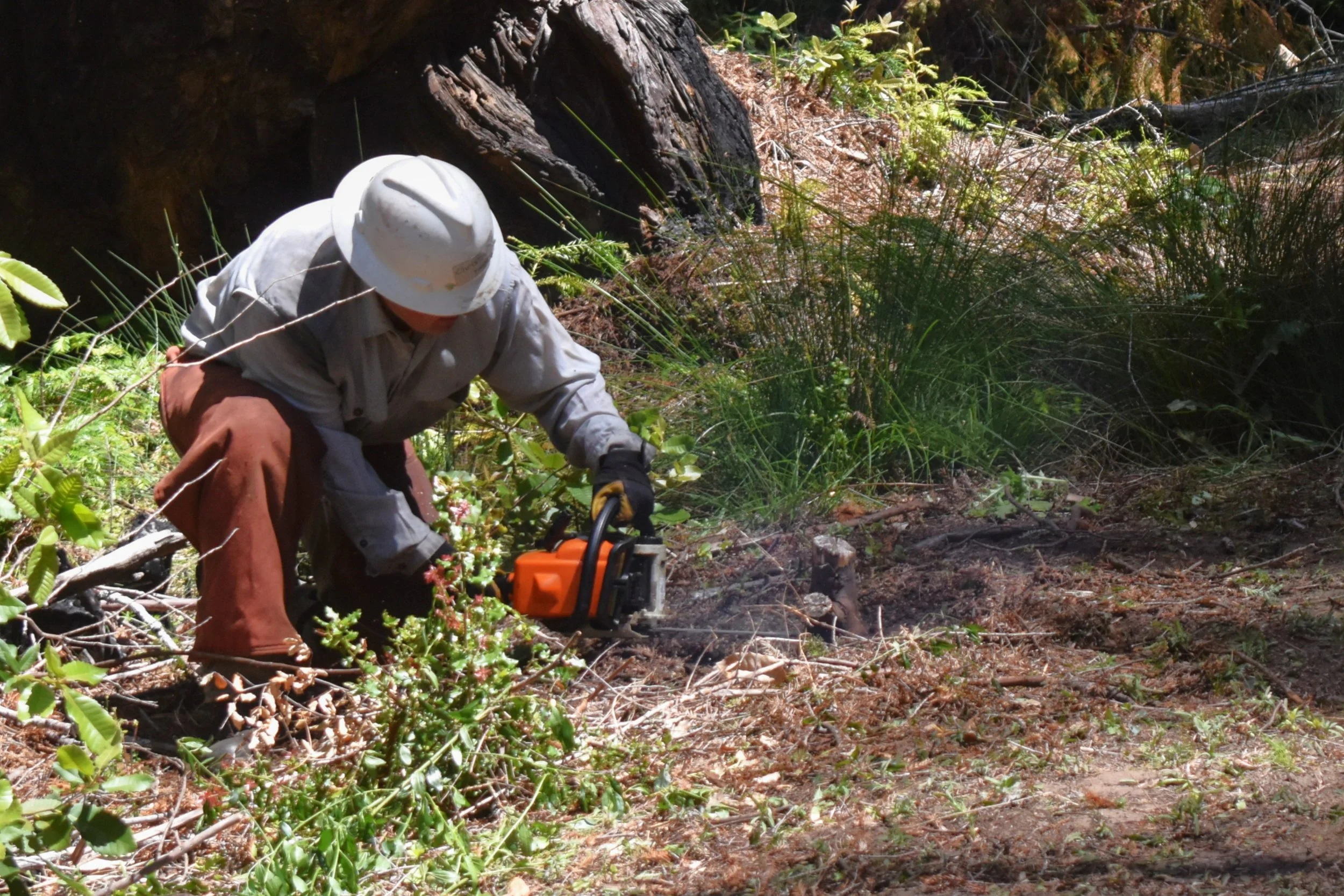
The work went quickly and smoothly and by lunch the trailhead had been cleared. Since the official opening wasn't scheduled until May 22, we set out an A-frame barricade and flagging tape to show it wasn't open though it was clear a trail was there.
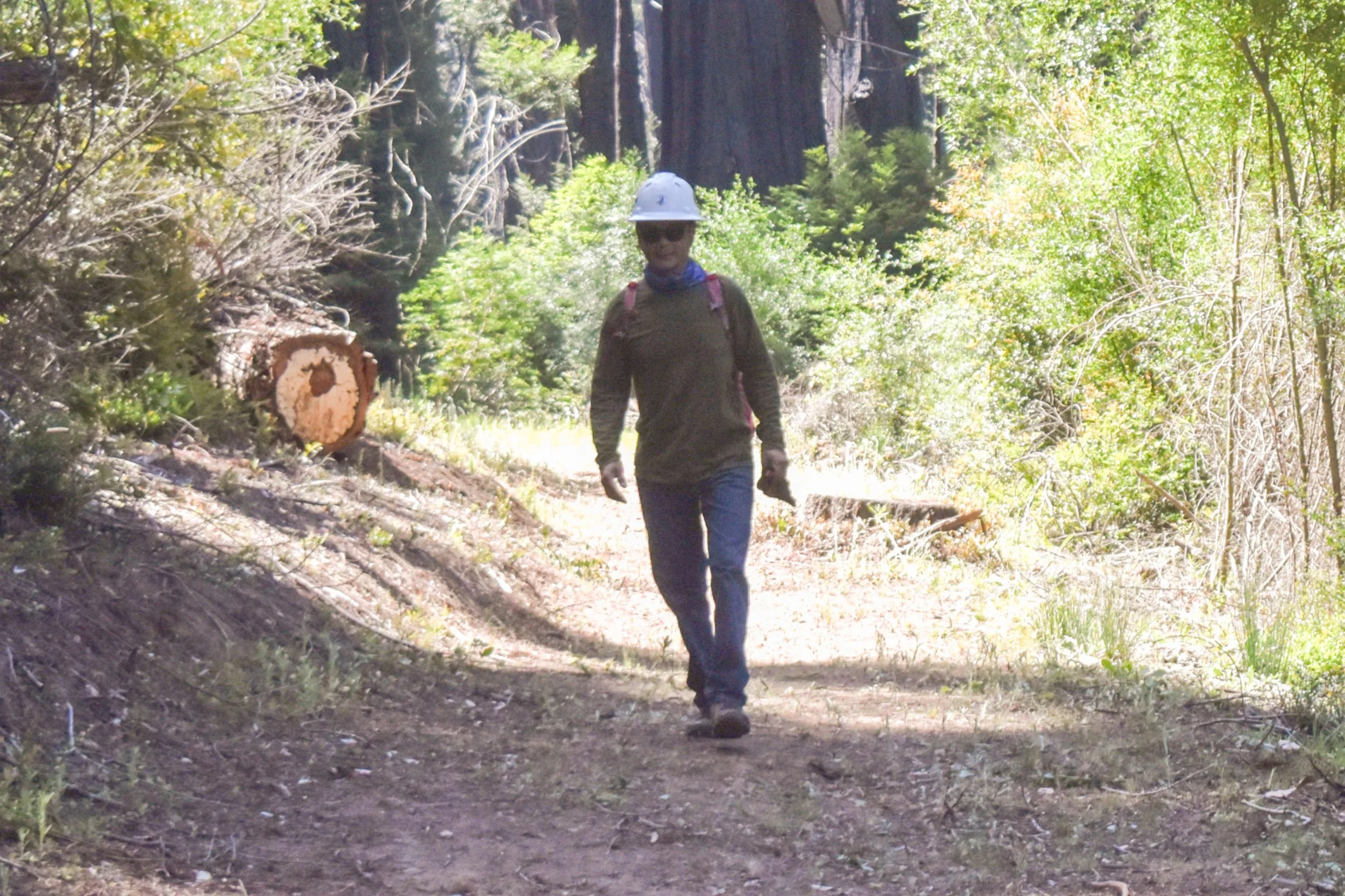
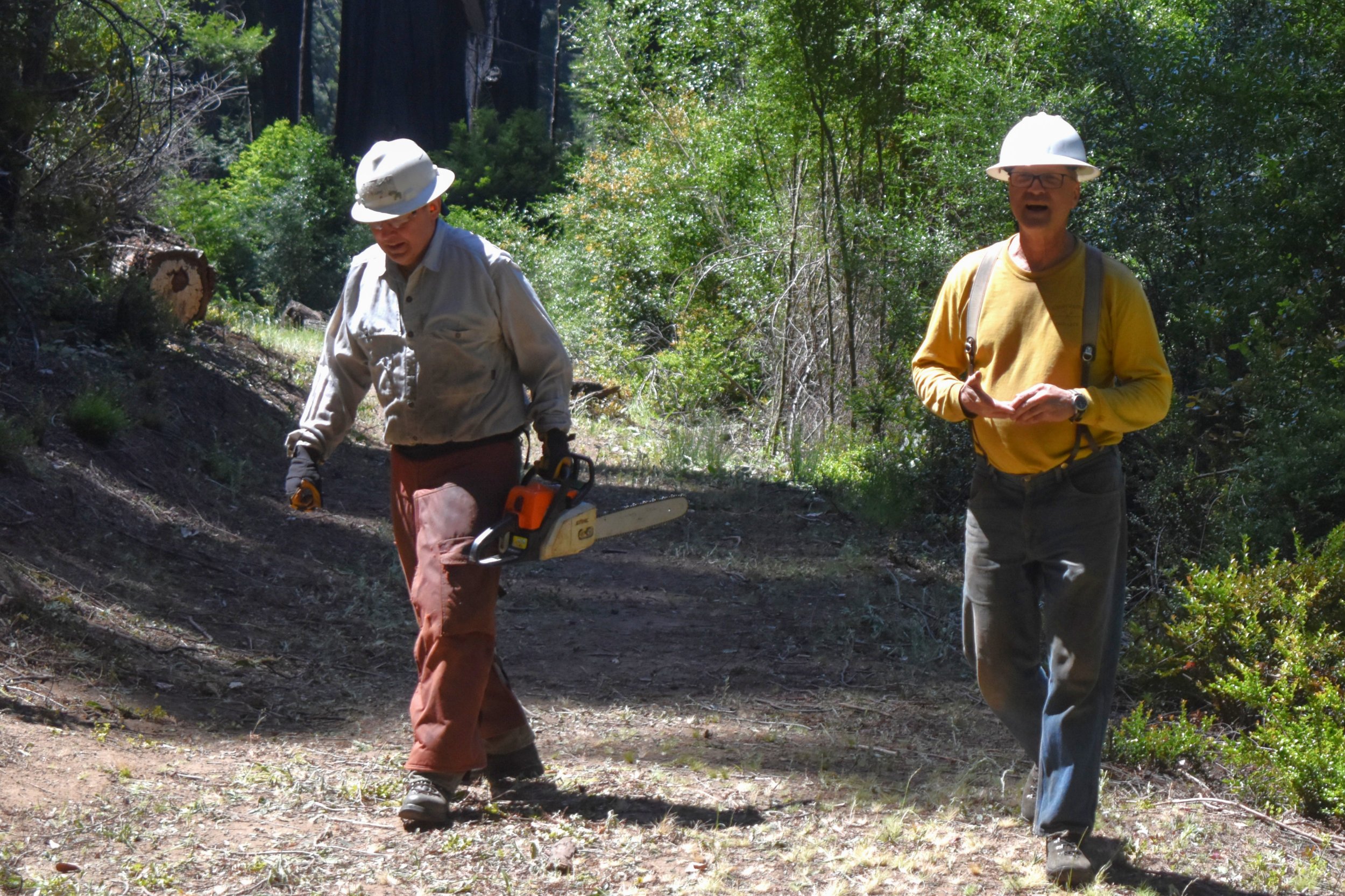
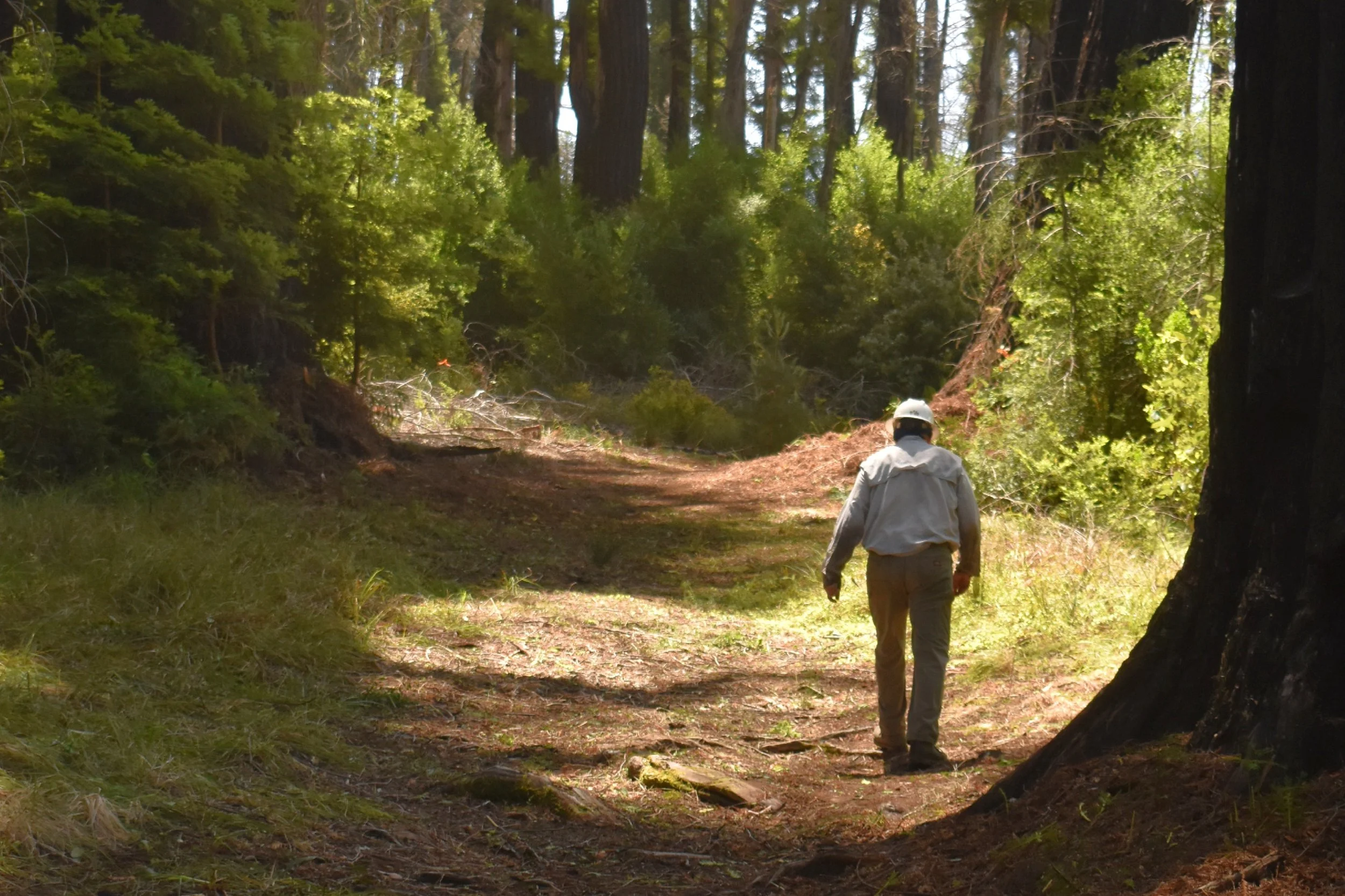
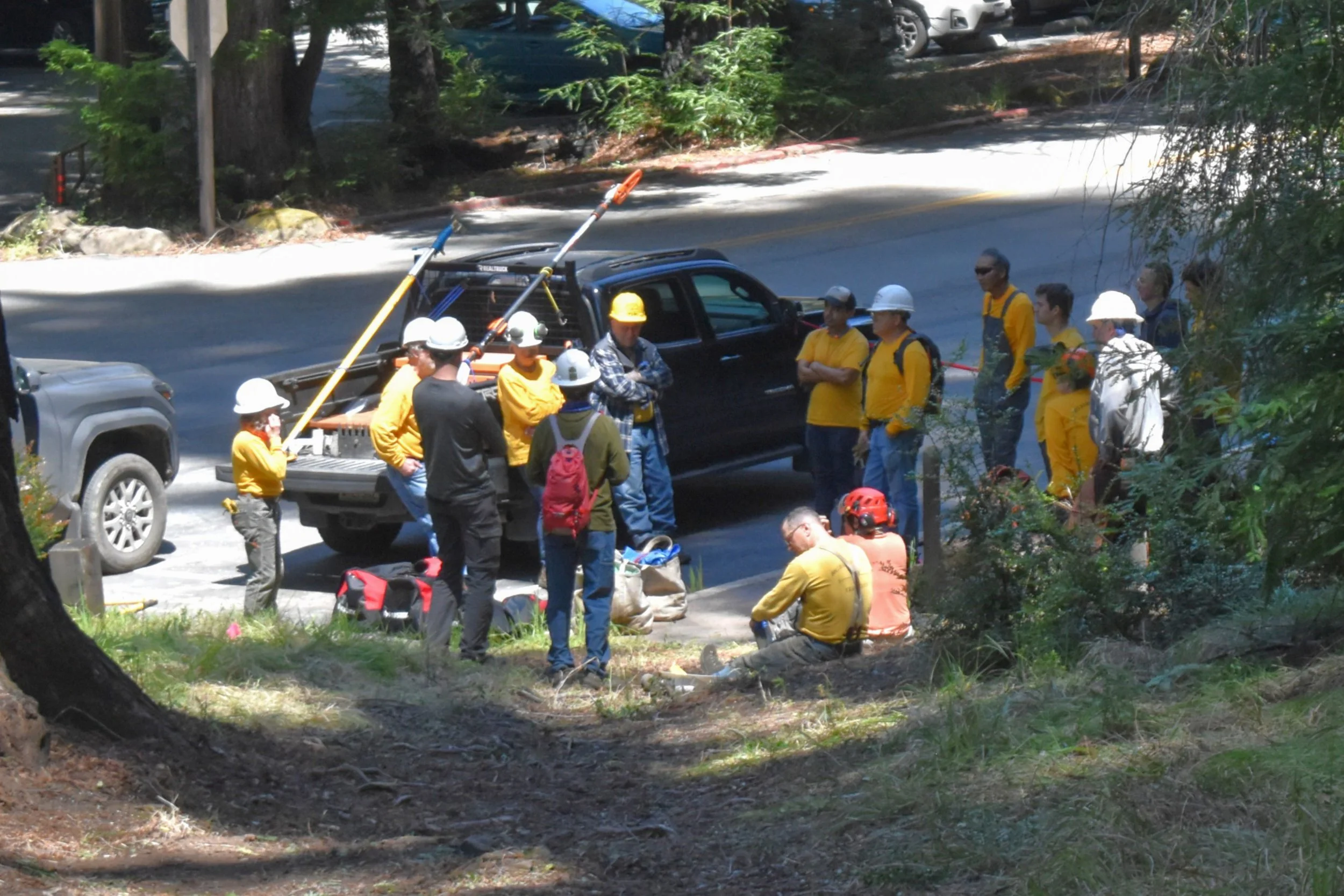
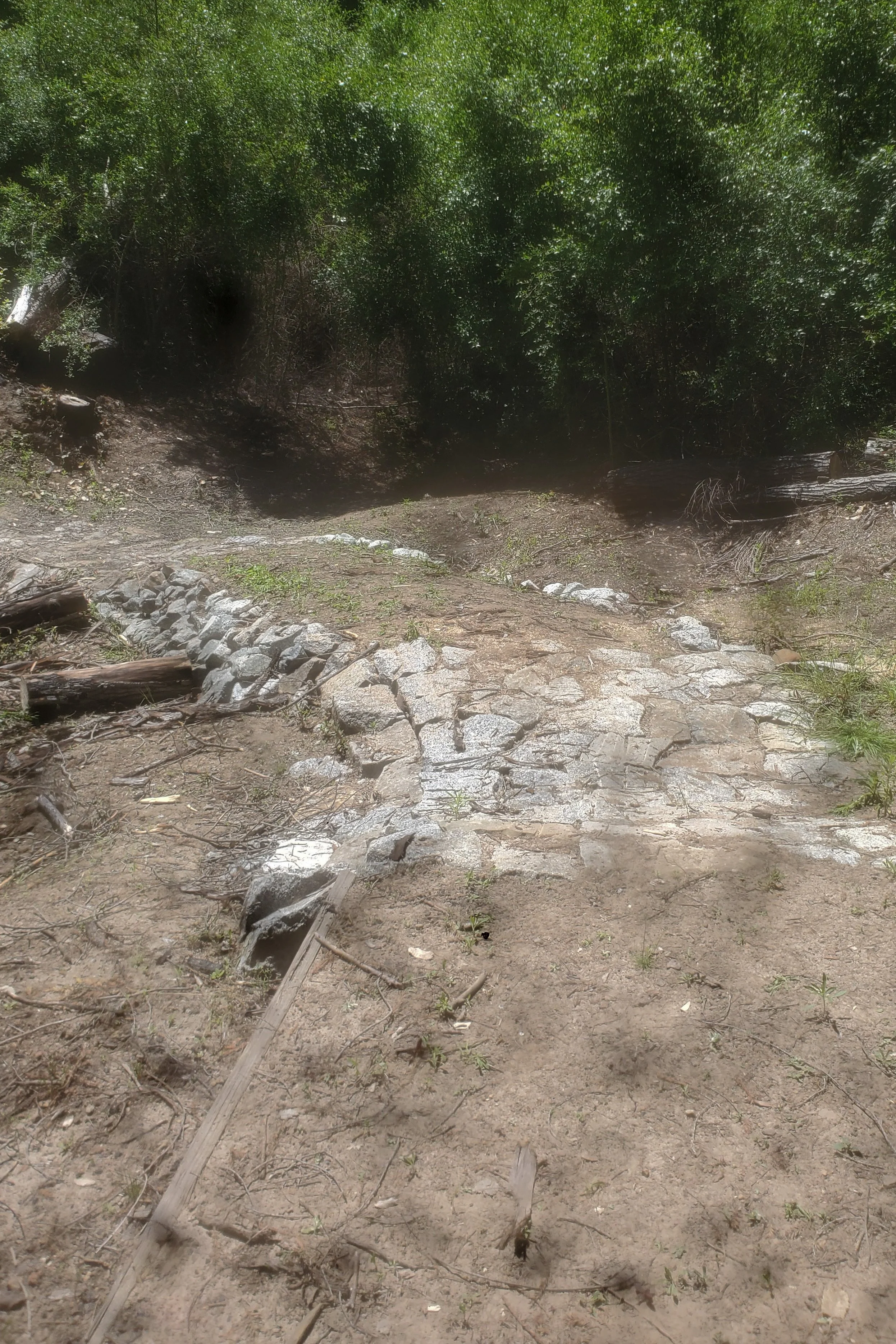
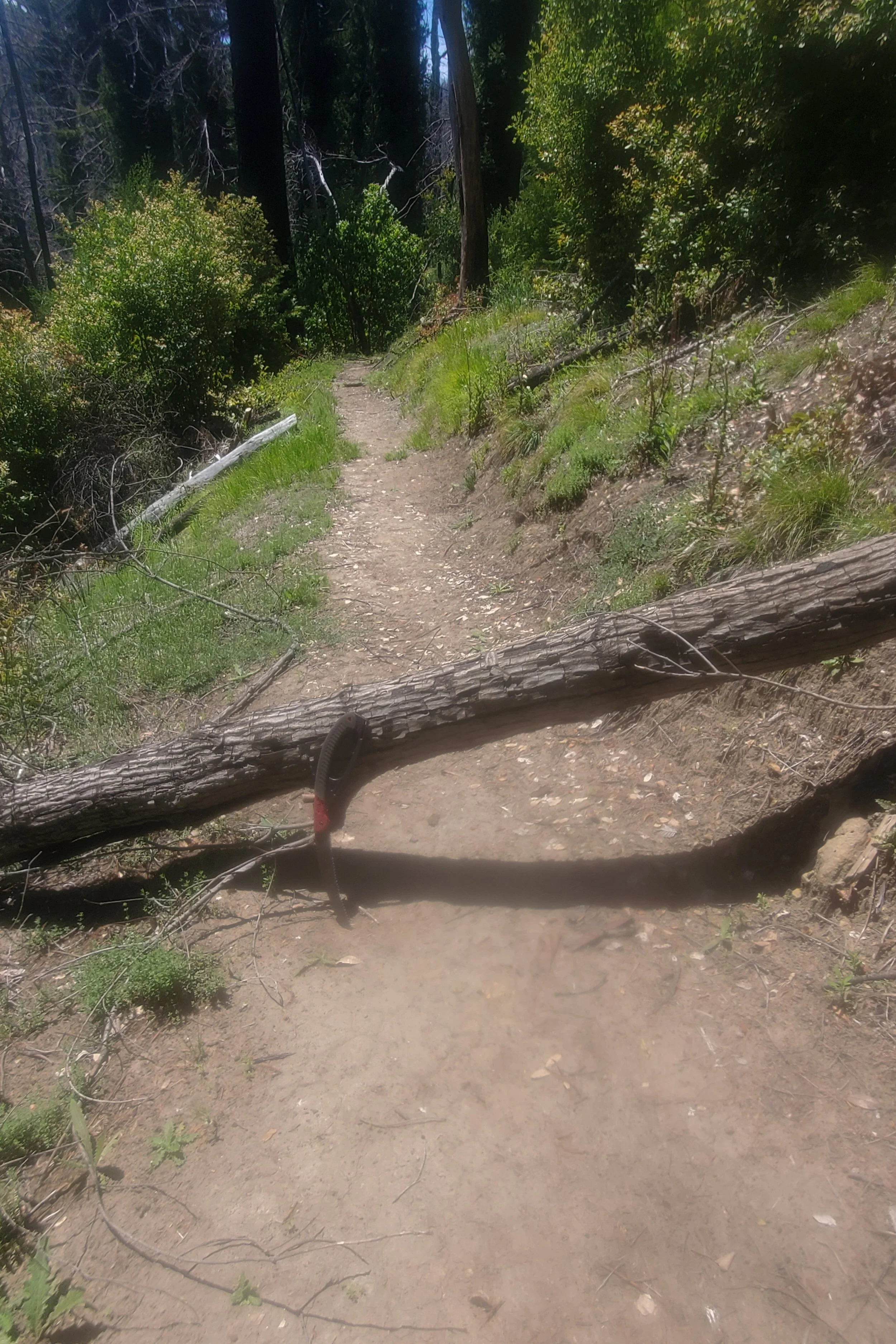
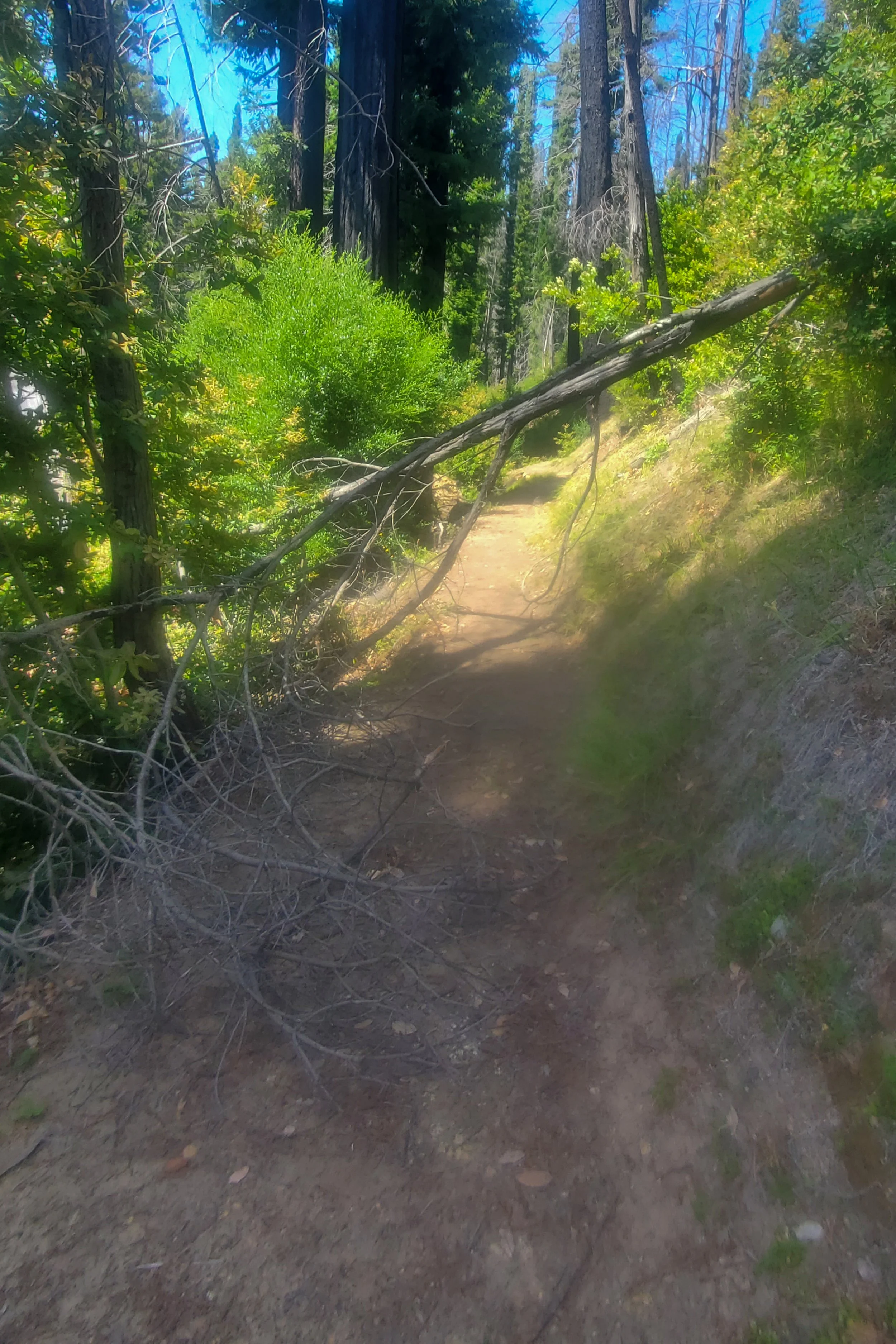
After lunch in a busy downtown Big Basin, we set off for a final check of the trail up to Slippery Rock finding only a small fallen tree on the trail that was quickly removed and a small, fairly deep, hole on the trail that may have been created when a burned out tree root collapsed. It had already been flagged with pink tape, so it was obviously on someone's list for repair. Chris scouted the rest of the trail to inspect the trail repairs and discovered 3 tree down across the trail but all were passable.

One of the Crew mentioned during the work that we don't often have the opportunity to mark special occasions. The crew put in 127 hours and thanks to Nan Bowman, Jim Brooks, Rory Brooks, Dan Chen, John Collins, Drew Granzella, Ryan Granzella, Tommy Ha, Vlad Kuznetsov, Andrea Lee, Janie Leifhelm, Bill Lock, Mike Peasland, Christian Rempis, Eric Voelkel, Chris Young and Daniel Zichuhr, for the help as we brought work on Sequoia Trail to a close.

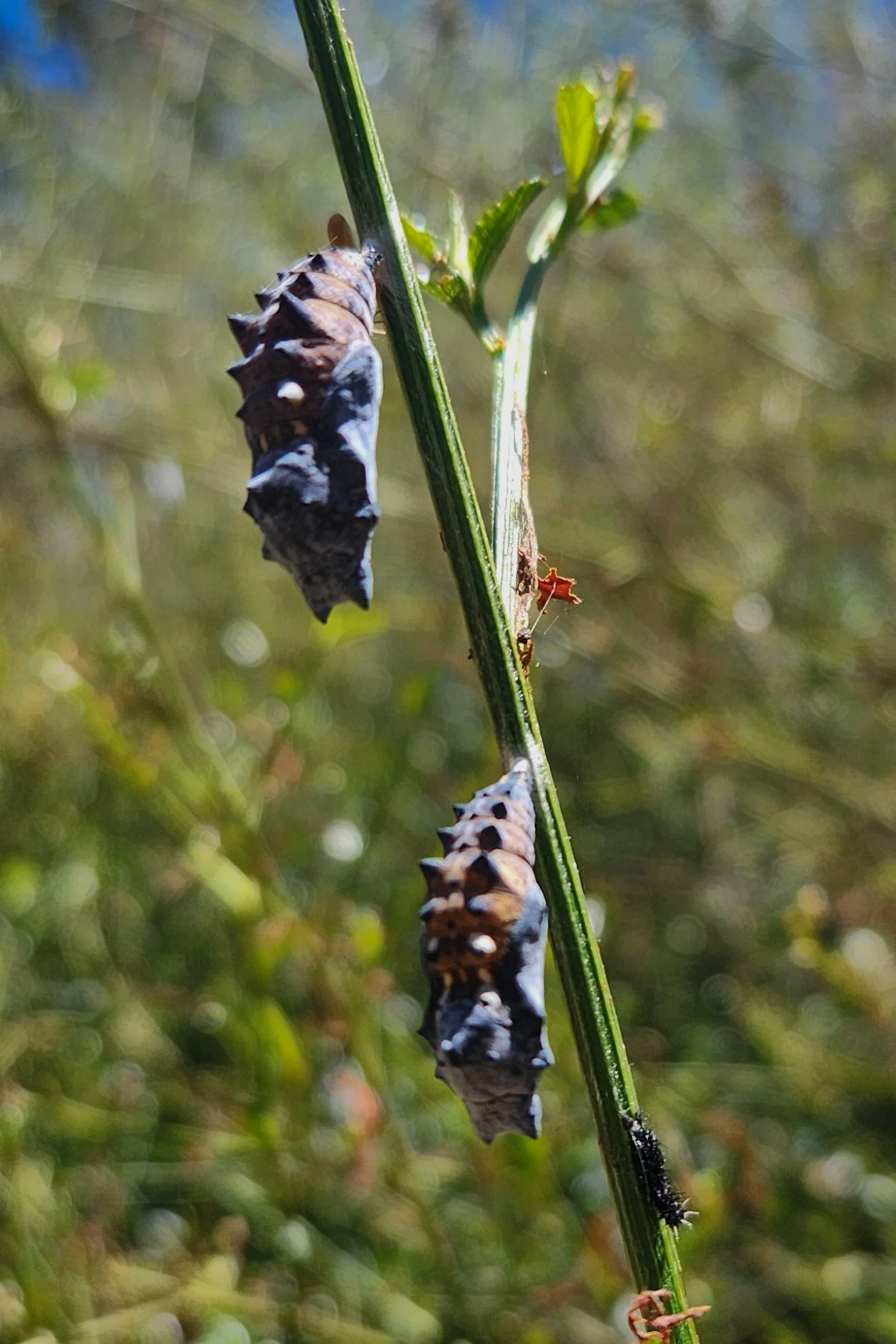
California Tortoise Shell Butterfly and Pupa
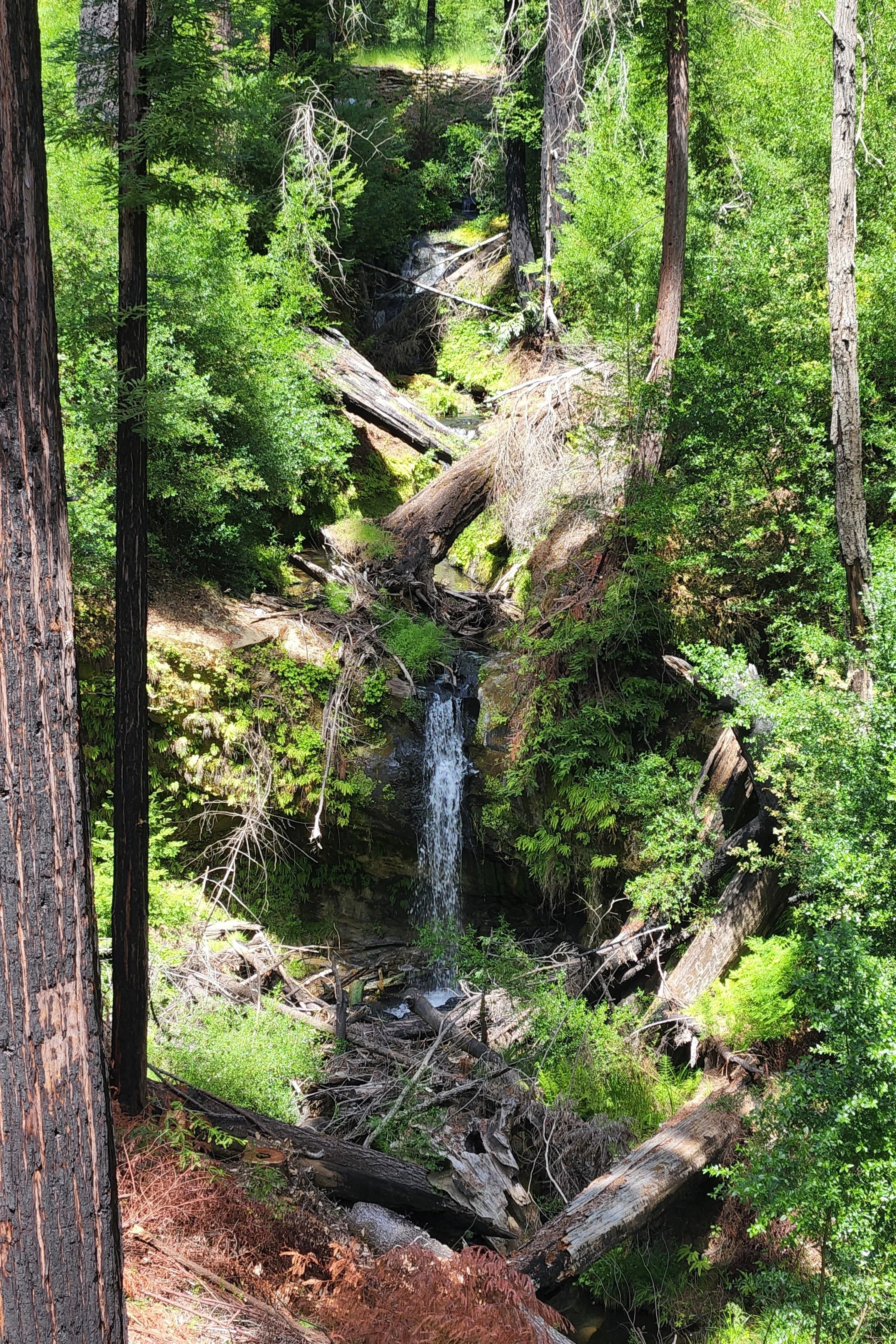
Sempervirens Falls
A research paper released in January 2026 by forest biologist Steve Singer notes that Blue Blossom Ceanothus (Ceanothus thyrsiflorus) is native to California and a fire follower, so it's appearance after the 2020 fires wasn't a surprise but it started slowly and it's only been since 2024 that dense thickets of vegetation 15-20 ft tall began to develop.
Singer says park staff and researchers were taken by surprise with the Ceanothus spread since the fires. Park records going back to 1902 have no mention of a similar widespread Ceanothus intrusion into the redwood forest.
The paper argues the presence of Ceanothus after the 2020 fires illustrates that fire frequency in Big Basin is likely every couple hundred years and of severity caused by a rare combination of extreme climate conditions such as prolonged drought, an unusually hot and persistent heat wave, low humidity, very low fuel moisture levels, and high winds coinciding with dry lightning.
Conditions that could become more frequent with climate change.
And fuel reduction practices such as prescribed burning and forest thinning will not significantly lower fire severity in old-growth redwood forests because it is the fuel moisture level and not the amount of fuel (vegetation) on the ground that drives these fires. Extreme weather is the source of the problem, and fuel reduction cannot change the weather.
Singer says where fuel treatment measures can be helpful is in previously logged stands or young redwood forests where trees have not yet developed the fire resistant bark and high canopies that old growth forests have to protect themselves.

by Mike and Jeff
photos by Chris, Mike, Bill, and Nan